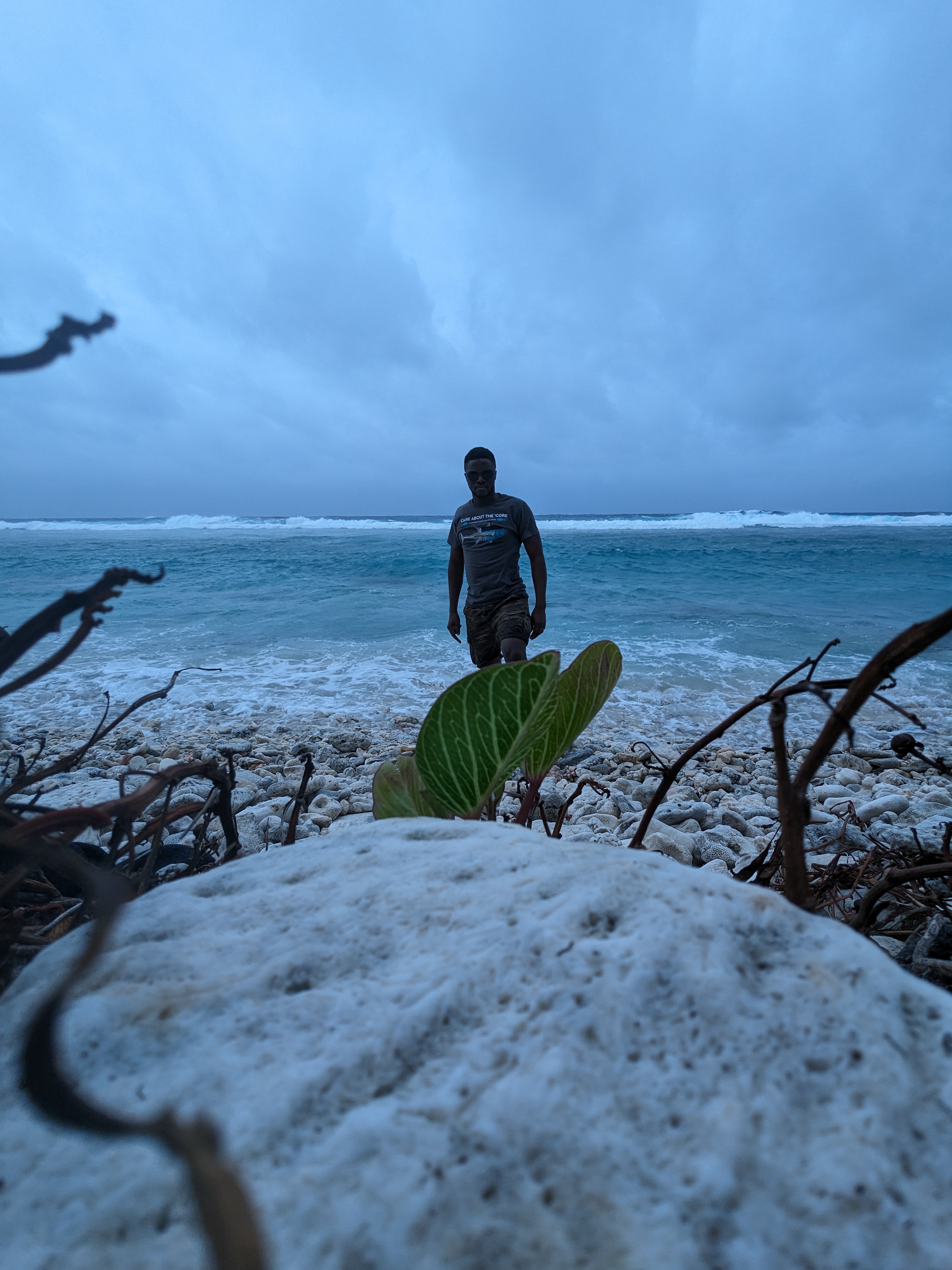

| This is part of the June 2024 HIFMB Newsletter In June 2023, governments adopted the so-called ‘BBNJ Agreement’, an internationally binding agreement under the United Nations Convention on the Law of the Sea (UNCLOS, 1982) aimed at the conservation and sustainable use of marine biodiversity in Areas Beyond National Jurisdiction (ABNJ). As the treaty is being signed by countries party to the United Nations, and awaits ratification (and implementation), it is crucial to pause and reflect some of the challenges of international efforts to protect marine biodiversity. A recently published paper considers the role of landlocked nations specifically in the writing of this new Agreement. What is the place of the land – and landlocked nations – in the negotiations? How might thinking with and from this perspective give us more knowledge on the Agreement and its stated objectives? 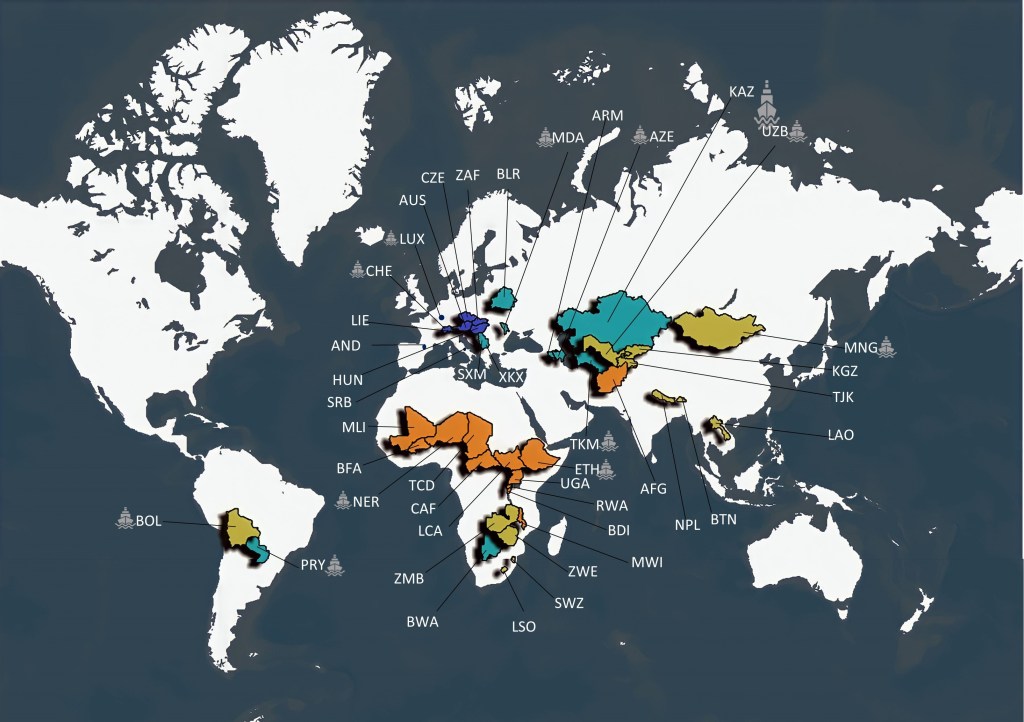 About 40% of the world’s population lives within 100 kilometres of the coast, with the majority – 60% – further inland. 44 countries in the world are landlocked and do not have a coast. Hence, relationships with the sea among individuals and populations vary, influenced by factors such as mobility, access rights, and other social, economic and political factors. While the ocean can seem far for many people – including managers and policy makers – via rivers, waterways, food, transportation, beaches, research, education, historical ties, stories, media, imagination, global citizenship, and other human influences like pollution, one can maintain a connection to the sea, whether coastal or in a landlocked state. It is crucial to note that negotiations concerning the oceans take place on land, specifically within the confines of the United Nations in New York. This underscores the primary influence of land-based ideas in shaping maritime policies, echoing the old saying, “land rules the sea.” Throughout the negotiations, interviews were conducted with various stakeholders to gauge their perspectives on the BBNJ processes and objectives. Some of the most interesting insights came from delegates of landlocked states, who expressed grievances concerning the expectation to attend, expectations of a limited interest in the governance of the oceans, and presence only to show solidarity (presumably with coastal states). Indeed, they highlighted how this perspective is tied back to the coast, pointing to representatives from coastal states who claim heightened interests and responsibilities due to proximity of the ocean, even though the coast or coastal waters were beyond the intended scope of the BBNJ, with its focus on Areas Beyond National Jurisdiction: the high seas, and the seabed and ocean floor or the ‘commons’ (in which, of course, all nations – landlocked or otherwise – have a stake). In so doing, the saying is complete, “land rules the sea and it does so at the coastal front.” » Born and raised in a landlocked country, through education and mediation, I care for, research and advocate for the conservation of the ocean. This made me ask: What is the place of the land – and landlocked nations – in international negotiations? « Solomon Sebuliba [Political Ecologist and Conservation Biologist] In the BBNJ context, it could be argued that there was a neglect of the Common Heritage Principle (CHP) – in other words, the principle that the cultural and natural elements in areas like those beyond national jurisdictions, belong to everyone, and should be available for everyone’s use and benefit, and yet carefully considering the needs of current and future generations. Mostly high-income coastal states insisted on applying national jurisdiction-based policies, and thinking, to the management of these global commons. Here we can see how the influence of land-based ideologies and governance structures impacted the Agreement, while also shaping the objectives and proposed management frameworks that have resulted. For instance, targets (for example for clearly demarcated marine protected areas) extend concepts from land to the ocean, even as the ocean (and life within it) clearly struggles to operate within the fixed terrestrial way of thinking. In the end, lines in the oceans, boundaries around mobile marine creatures, and static governance frameworks, cause the ocean to become somehow landlocked. As we exert significant influence over the sea from land, it becomes imperative to bring the sea to land, integrating marine considerations into terrestrial decision-making processes. This necessitates viewing ecosystems not just as interconnected wholes, but also breaking down traditional land-sea divisions. Incorporating both marine and terrestrial perspectives into land and sea-use planning, resource management, and policy development is crucial. Ocean research institutions and awareness programs should extend beyond sea adjacency, encompassing diverse landscapes from coast to coast and land to land Reference: Sebuliba S (2024). The landlocked ocean: landlocked states in BBNJ negotiations and the impact of fixed land-sea relations in global ocean governance. Frontiers in Marine Science, Vol 11. doi.org/10.3389/fmars.2024.1306386 |
The “Landlocked Ocean” Challenges International Efforts to Protect Marine Biodiversity in the High Seas
by Solomon Sebuliba
 Solomon Sebuliba
Leave a comment